
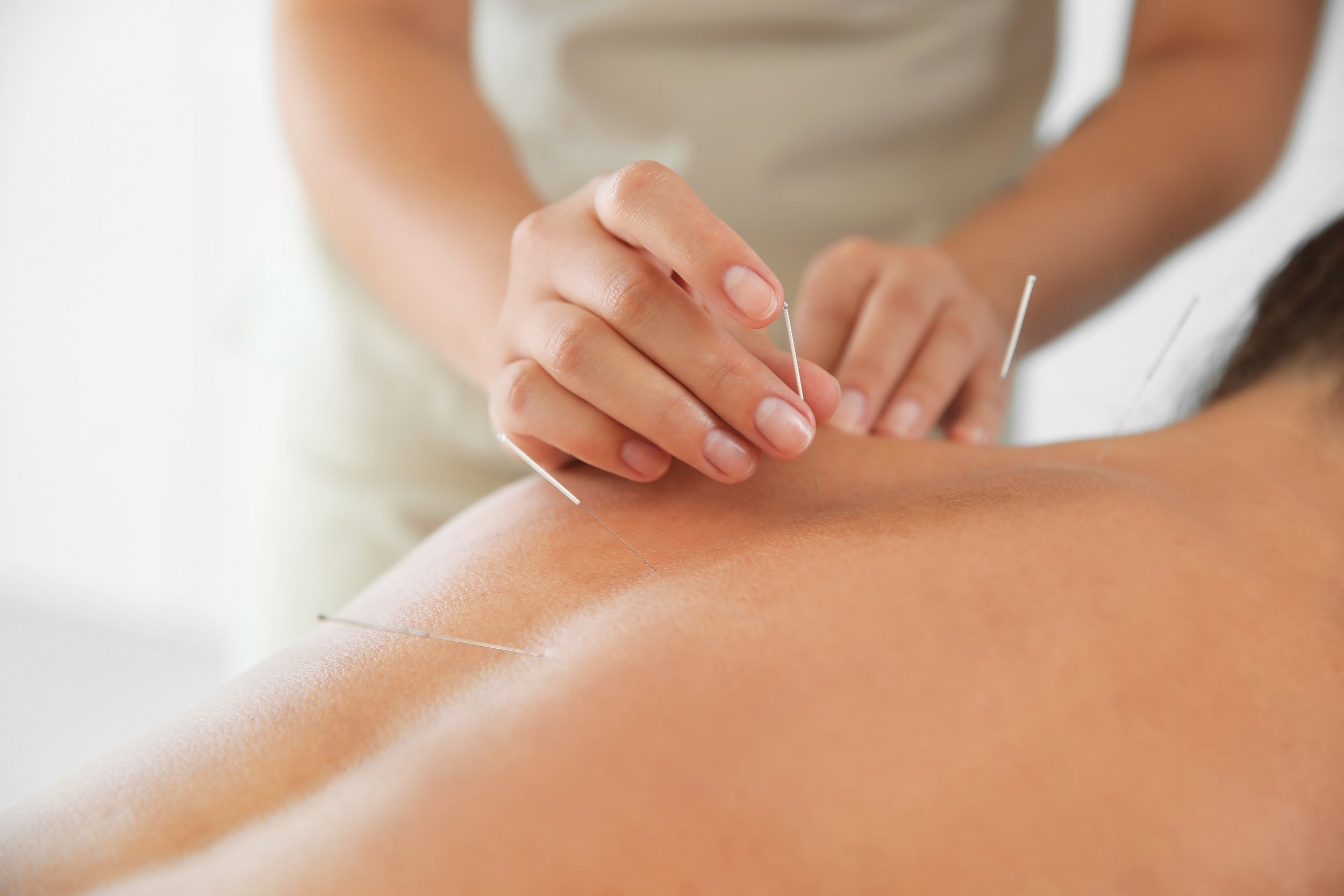
Acupuncture
An integrated approach to your wellbeing
We combine Traditional Chinese Medicine with Five Element Acupuncture. Traditional Chinese Medicine helps to alleviate physical symptoms whilst Five Element Acupuncture focuses on emotional and spiritual wellbeing. By combining the two, we are able to provide an overall holistic approach based on treating the whole person.

What is Acupuncture?
Acupuncture is part of the ancient practice of Chinese medicine which can be traced back nearly 2,000 years. It is based on the philosophy that our health and wellbeing is dependent upon the healthy flow of energy or ‘Qi’ and blood and the correct balance of Yin and Yang. When any of these become imbalanced, it can result in disease and illness on a physical, mental or spiritual level.
Stimulation of specific acupuncture points with fine needles can restore the flow of Qi and blood, correct any imbalances within the body and trigger the body’s natural healing response.
The core principle of Chinese medicine is to treat underlying imbalances contributing to disease and not just the symptoms. Our approach is therefore to not only treat any symptoms, but also the underlying cause of these symptoms.
Our Style of Treatment
We practice using both Traditional Chinese Medicine and Five Element Acupuncture
Traditional Chinese Medicine is based on the state of a person’s Qi and blood and the balance between Yin and Yang. Imbalances in any of these can result in physical and emotional illness and disease. Treatment focuses on correcting these imbalances to alleviate symptoms, treat underlying causes of the imbalance and support the body's natural healing process.
Five Element Acupuncture is based on the dynamic interplay of the five elements within Chinese medicine: metal, water, wood, fire and earth. Each element is connected to a specific emotional response. If an element becomes out of balance, the associated emotional responses can become heightened. By focusing treatment on the imbalanced element, emotional and spiritual wellbeing is prioritised.
By using both styles of acupuncture, we are able to treat the whole person on a mind, body and spirit level.
Other Treatment Methods
In addition to acupuncture, treatment may also involve use of the following therapies.

Cupping
Cupping involves the placement of suction cups on specific parts of the body which stretches the muscle and connective tissue underneath.
It helps to clear blockages of Qi and blood in the muscles which contributes to pain, increases blood flow, removes toxins, relaxes the muscles and promotes healing.
It is mainly used to treat musculoskeletal issues, but can be used to treat a variety of other conditions.

Gua Sha
Gua sha involves the use of a smooth-edged tool to gently scrape areas of the body, which raises tiny round spots on the skin.
It reduces inflammation, smooth areas of tension or knots in the muscles, encourages a healthy flow of Qi and blood and clears toxins.
It is used mainly to treat musculoskeletal issues, but can also be used to clear excess heat from the body, such as that experienced due to the menopause.

Electro Acupuncture
Electro acupuncture involves connecting various acupuncture needles with small clips to a TENS device which delivers a gentle electrical current to the needles.
It removes blockages of Qi and blood in the muscles and also encourages an increased flow of blood to the muscles which aids recovery.
It is used to help treat pain in the muscles and around joints, such as pain caused by arthritis.
Frequently Asked Questions
Here are some of the questions we are asked most often, if you have any other questions please get in touch and we will be happy to help.
-
In Chinese medicine energy or ‘Qi’ flows through the human body via meridians (or pathways). These meridians and Qi are accessible through various acupuncture points in the body, with each having a different effect when stimulated. By inserting needles into certain points with appropriate combinations, the flow of energy is brought back into balance.
From a Western medicine perspective, acupuncture points are thought to correspond with areas of the body where nerves, muscles and connective tissue are situated. When stimulated with acupuncture needles, this results in increased blood flow, calming of the central nervous system and production of pain-relieving endorphins.
-
Following extensive research, the World Health Organization recommends acupuncture for over 100 conditions, including lower back and neck pain, headaches, depression, allergies and gastritis. It also lists 28 conditions for which acupuncture was proven through controlled trials to be an effective treatment and, for remaining conditions, it was shown to have a ‘therapeutic effect’.
Please contact us or book a free 15 minute telephone consultation if you would like discuss how acupuncture can help you.
-
The needles used in acupuncture are extremely fine and most patients experience minimal to no discomfort when they are inserted. You may feel a slight sensation when the needles are stimulated, such as tingling, warmth or a dull ache, but this is typically well tolerated and is often followed by a sense of relaxation.
-
Your first appointment will consist of a consultation and treatment and will be longer than subsequent sessions. As acupuncture is focussed on treating the whole person and not just one specific disease, during the consultation, you will be asked a series of questions exploring various aspects of your life, such as your main complaint, sleep patterns, diet, emotional state and general lifestyle. This will then be used to formulate a personalised treatment plan.
Subsequent appointments will be focussed on monitoring progress, providing ongoing treatment and discussing possible lifestyle changes.
-
The number of treatments you will require will depend on your specific condition, including how long you have had it and how your body responds to treatment. Many patients experience improvements after a few sessions, whilst more long-standing and complex conditions require treatment over a longer period of time.
A series of regular treatments is usually required to achieve optimal results, preferably, on a weekly basis. Your progress will be regularly discussed with you, but in general at least six sessions are recommended to see how you respond to treatment.
Some patients choose to have regular treatment as a preventative method, to maintain good health or because they simply find it relaxing.
-
Please ensure you eat something light prior to your appointment, but avoid a heavy meal.
It is recommended that you wear loose fitting clothes that can be rolled up to the elbows and knees so that acupuncture points can be accessed.
-
Acupuncture affects everyone differently. Some patients feel relaxed and calm after treatment whilst others may feel energised. It is advised to avoid vigorous activity or alcohol following treatment, and if possible, it is best to take some time to relax after treatment.
-
Acupuncture is considered safe when performed by a trained acupuncturist. Ensure any practitioner you see is a member of the British Acupuncture Council. Our practitioner is a member of both professional bodies.
Acupuncture has few side effects and any that do occur are usually mild and self-correcting. Possible side effects include bruising or slight bleeding at the site of the insertion of the needle, feeling tired following treatment, feeling emotional during or after treatment or a temporary worsening of symptoms.
It is important you disclose any health issues and medications you are taking to ensure safe treatment is provided.
-
Many private health insurance providers cover acupuncture. Please check with your insurance provider to find out if they will cover the cost of your treatments.
You will be responsible for paying for your treatment and we will provide you with a receipt so you can claim the cost back from your insurer.